franchising
What It Takes to Open and Run a Modern Candle Bar
You've stood in a retail space imagining the layout. You've walked through a dozen Saturday evenings at restaurants, coffee shops, or wine bars watching people gather and wondering if you could create that feeling yourself. You've seen the shift toward experiences over things and thought, maybe this is the moment to build something people actually want to visit, not just shop at and leave.
Opening a candle bar isn't like launching a traditional retail store. You're not stocking shelves and hoping foot traffic converts. You're designing an evening people book weeks ahead, a 90-minute window where guests make something with their hands while drinking wine across a table from someone they care about. The business model is hospitality, not product, and that changes everything about how you build it.
The Space Itself: Atmosphere Before Square Footage
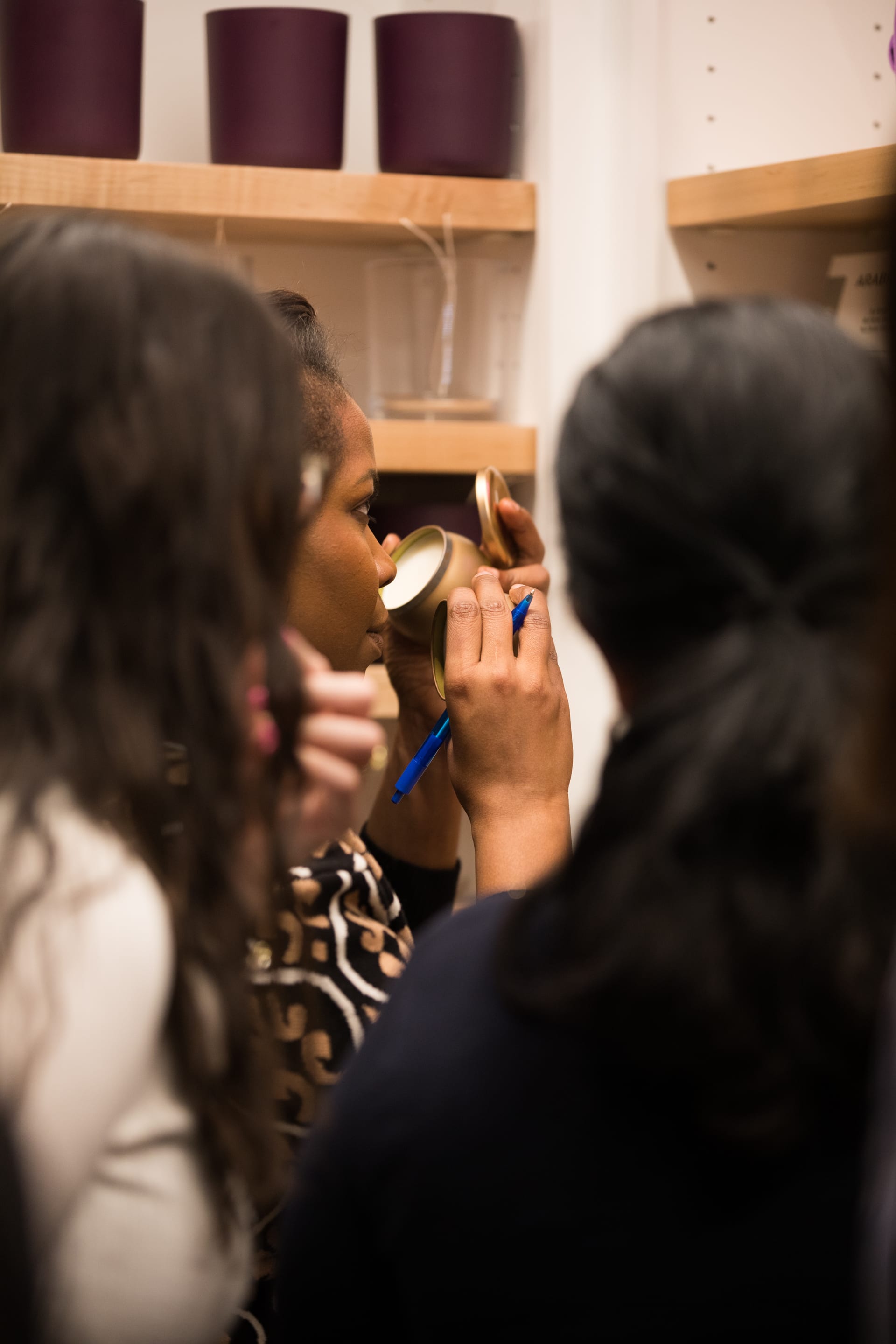
Walk into any Cork & Candles location and the first thing you notice isn't the candles. It's the warmth. Soft lighting, wood tables, wine-bar seating. The design language borrows from Napa tasting rooms, not craft studios. That's intentional. Guests are here for an evening out, not a DIY class, and the space has to signal that from the threshold.
When scouting real estate, square footage matters less than vibe potential. You need room for tables, a Scent Library wall that holds 60+ fragrances without feeling cluttered, and a back-of-house area for wax prep and curing. But the layout priority is intimacy. Tables are spaced so each group feels like they have their own corner, the way a good restaurant architect thinks about sightlines and acoustics. You're not packing people in. You're giving them room to talk without shouting over the next table.
King of Prussia sits in a mixed-use development on Main Street. Center City is tucked inside The Philadelphia Building, a historic office tower on Walnut Street where office workers pass the windows on their lunch break and file the name away for later. Ardmore is in Cricket Flats on the Main Line, walkable from the train. None of these are high-traffic mall anchors. They're neighborhood spots people choose to visit, and that requires a different kind of visibility: online booking, word-of-mouth, repeat customers who bring friends.
Staffing: You're Hiring Hospitality, Not Craft Instructors
The Cork & Candles team isn't a workshop instructor standing at the front of a room. Every table gets a Chandler, a trained candle maker who serves that group individually, the way a waiter owns a section at a restaurant. That changes the hiring profile. You're looking for people who can read a table, pace an evening, open a bottle of wine gracefully, and teach someone to pour wax without making it feel like homework.
Training a Chandler takes weeks. They need to know the Scent Library cold (which 60 fragrances sit where, which families pair well, how to guide a guest who's overwhelmed by choice without pushing them toward a specific blend). They need to understand the cure process, why candles sit for 7 days before first burn, how to explain that to a guest who wants to light theirs in the car on the way home. They need to move between tables without hovering, refill a wine glass without interrupting a conversation, and make the whole 90 minutes feel effortless.
You can't automate that. You can't replace it with a video tutorial or a self-serve station. The Chandler is the reason a couple comes back for their anniversary instead of trying a paint-and-sip next time.
Inventory and Operations: The Quiet Complexity Behind "Pick Two Scents"
Guests see 60 fragrances on the Scent Library wall and a table set with two empty vessels. What they don't see: the supply chain that keeps those 60 oils stocked, the proprietary wax blend that has to pour at the right temperature and cure cleanly, the label printer that spits out each guest's custom sticker, the back-of-house shelving where candles sit for 7 days before pickup.
Every session means two candles per guest. A table of four is eight candles. A Friday night with six tables is 48 candles curing in the back. Multiply that across three locations and you start to understand the volume. You're not making 10 candles a week for an Etsy shop. You're running a production operation disguised as a tasting-room experience.
Wax suppliers, fragrance oil vendors, vessel sourcing, wick inventory, label stock, the POS system that tracks which guest made which candle and when it's ready for pickup. None of this is visible to the customer, and it shouldn't be. But it's the operational backbone that lets you scale past the first location without the wheels falling off.
BYOB Licensing and Local Regulations
Pennsylvania BYOB laws are more permissive than some states, but there's still paperwork. You're not selling alcohol, so you skip the liquor license maze, but you do need to confirm local zoning allows BYOB on your premises. Some municipalities require a BYOB permit. Some restrict it to wine and beer only (which is our rule anyway, no spirits). Some limit hours or require food service.
Center City sells wine on-site in addition to allowing BYOB. That required a retail wine license, which in Pennsylvania means navigating the PLCB, waiting for quota availability, and paying upfront for the privilege. King of Prussia and Ardmore are BYOB-only, which simplified licensing but meant leaning harder on marketing to remind guests to bring a bottle.
When you open your own location, the first call is to the local zoning office, not the landlord. Find out what's allowed before you sign a lease. A space that's perfect in every other way but can't accommodate BYOB isn't a candle-bar space.
Marketing an Experience, Not a Product
You're not selling candles. You're selling the memory of making them. That distinction shows up in every piece of marketing. Instagram posts aren't product shots. They're hands pouring wax, friends laughing across a table, a couple holding their finished candles under soft light. The booking page doesn't say "buy a candle-making class." It says "reserve your evening."
Word-of-mouth is the primary driver. Someone comes for a bachelorette. They post Stories. Three friends see it and book their own session. A couple comes for date night, loves it, brings another couple the next month. Corporate teams book a dozen seats for an offsite. You're not paying for every customer, you're earning them through the experience itself.
But you do need to show up in search. Someone Googles "things to do in King of Prussia" or "date night ideas Philadelphia" and you need to rank. That means a clean website, local SEO, blog content that answers real questions people are typing into Google at 11 p.m. on a Tuesday trying to plan the weekend.
The Hardest Part No One Warns You About: Consistency Across Sessions
One bad Chandler, one poorly poured candle, one guest who felt rushed, and that table doesn't come back. Worse, they tell someone. The experience has to feel the same at 2 p.m. on a Wednesday as it does at 7 p.m. on a Saturday. That requires systems. Checklists for table setup. Scripts (loose, not robotic) for how Chandlers introduce the Scent Library. Quality checks on every candle before it goes home.
Scaling to a second location meant duplicating that consistency in a new building with a new team. Scaling to three meant writing down everything that used to live in someone's head. You can't be at every session. You can't personally train every Chandler. The business has to run without you in the room, and that's the line between a job you own and a business that works.
Curious about opening your own Cork & Candles location? Learn more.