franchising
Why Experience-Based Retail Is the Strongest Bet in 2026
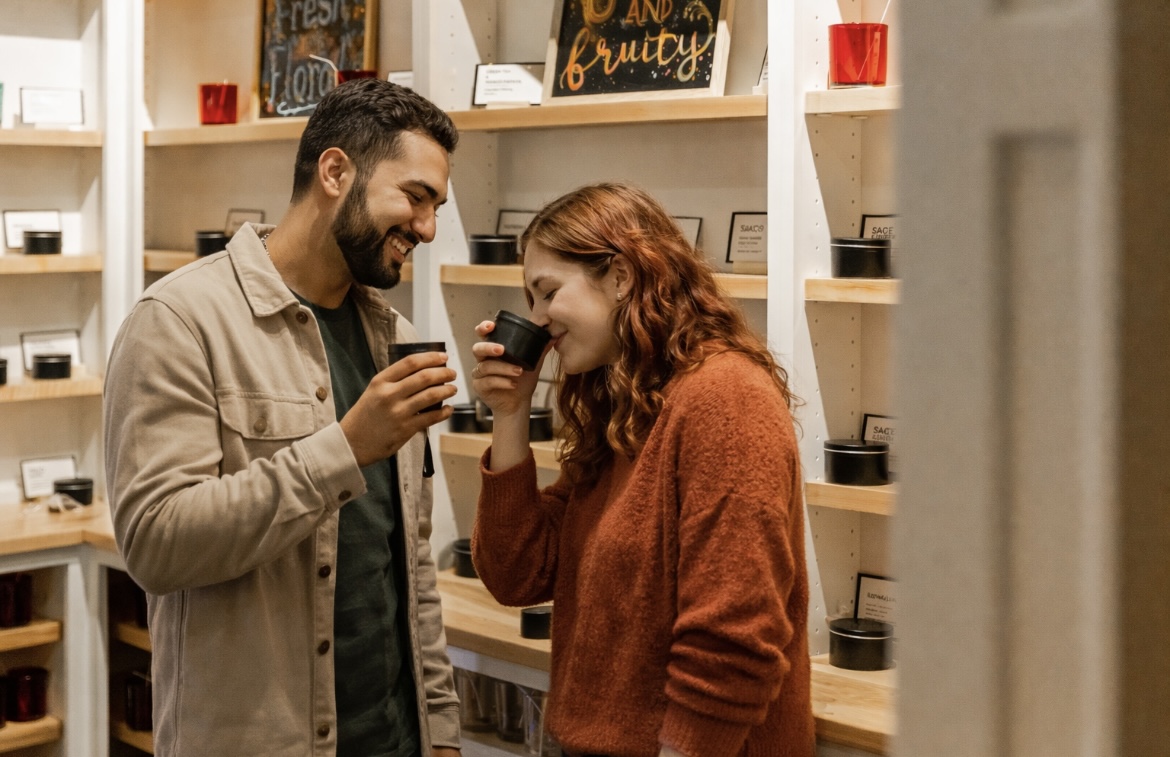
Retail has been bleeding out for years. The culprit isn't just Amazon or economic shifts, it's that most stores give you nothing you can't get delivered to your couch in 48 hours. Walk into a mall today and half the storefronts are either vacant or staffed by employees who'd rather be anywhere else. The ones still standing are either selling something you genuinely can't get online (alterations, food made to order) or they've figured out the only moat left: an experience you'll actually remember.
Cork & Candles didn't start as a response to the retail apocalypse. It started because Dave Straub learned candle-making from his father Ken in the 1960s, and decades later, Dave and his son Kenny wanted to build something people would talk about the next day. But the timing turned out to be everything. We opened in an era when "going out" had to mean more than browsing shelves, and what we've watched unfold over the past few years is this: experiences don't just survive economic uncertainty, they thrive in it. Here's why experience-based retail is the strongest bet going into 2026, and what makes it different from the models that are quietly dying.
People pay for memories, not stuff
The shift started long before the pandemic, but COVID put it in neon lights. Younger consumers, Gen Z and millennials especially, spend more on experiences than on physical goods. A candle from Target costs $20 and sits on a shelf. A 90-minute session where you blend two fragrances from a 60-scent library, pour two 8 oz. candles with someone you actually like, and leave with something you made, costs $62 and gets photographed, texted to friends, and remembered six months later. The delta isn't the price, it's the return on attention.
At Cork & Candles, we see this every weekend. Guests aren't just making candles, they're marking an occasion. Bachelorettes pre-wedding. Couples on anniversary dates. Coworkers who'd rather bond over Espresso Latte and Rose Bubbly than book another Top Golf night where only the sales team can hit, or a paint-and-sip where half the room is convinced they can't draw. Candle making is the rare team activity that requires zero skill: pick scents you like, blend, pour. Everyone walks out with something they made and actually want to take home. The candles themselves are great (they cure for seven days and actually smell like what you picked), but the reason people come back is the two hours they spent sitting across from someone they care about, doing something together that wasn't passive consumption.
Recession-resistance isn't about being cheap, it's about being worth it
Experience-based retail gets framed as "premium" or "luxury," and that makes people nervous when the economy tightens. But here's what actually happens: in uncertain times, consumers cut spending on things they don't care about and double down on the things that matter. A $62 date night or friend outing isn't discretionary the way a seventh pair of jeans is. It's intentional. You planned it. You're paying for time, for attention, for the guarantee that this won't be another forgettable Saturday.
The numbers back this up. Most weekends fill up well in advance. Valentine's Day and Mother's Day sell out weeks ahead of time. We've watched corporate groups, bachelorettes, and birthday parties fill our calendar through wedding season (April through October) without slowing down, even when headlines scream recession. The reason isn't that we're cheap, it's that the value is obvious. You leave with two candles, yes, but you also leave having actually spent 90 minutes with the people you came with, face to face across a table, choosing scents together, laughing at how different your blends turn out. That's not a nice-to-have. That's what people are starving for.
The model forces differentiation
Traditional retail competes on price, selection, or convenience, and Amazon wins all three. Experience-based retail competes on something you can't ship: being there. That shifts the entire equation. You're not trying to be cheaper or faster. You're trying to be the version of the thing that people actually want to do.
Cork & Candles doesn't market itself as a candle store. We're a BYOB scent bar where you make two custom-blended candles in a Napa-style space that feels more like a wine tasting than a craft class. That framing matters. We're not competing with Yankee Candle or Bath & Body Works. We're competing with dinner reservations and escape rooms and whatever else couples or groups do when they want to spend real time together. And because the experience is the product, it's inherently harder to commoditize. You can't knock off "sitting across from your best friend blending Bamboo Garden and Sea Salt and Cotton Lily while your Chandler walks you through the pour."
Real estate becomes an asset again, not a liability
Brick-and-mortar retail has been running from its own square footage for a decade, downsizing, closing, going pop-up. But experience-based retail makes the space the whole point. You need the room. You need the vibe. You need the Scent Library on the wall, the tables arranged so groups aren't crammed together, the lighting that reads more wine bar than workshop.
Cork & Candles operates three locations: King of Prussia, Center City Philadelphia, and Ardmore on the Main Line. Each one is designed with warm wood, soft lighting, and a layout that treats every table like a restaurant booth, not a classroom desk. Guests sit face to face, not side by side, because the experience was built around conversation. That's intentional. The space does half the work. You can't replicate that feel at home, and that's the reason people show up.
And here's the kicker: because the experience requires being there, location matters in a way it hasn't for traditional retail in years. You're not fighting for foot traffic against twenty other stores selling the same thing. You're the only place in town doing what you do. That gives you pricing power. It gives you brand loyalty. It makes your lease an asset, not a countdown to bankruptcy.
It's scalable, but only if the brand actually delivers
The risk with experience-based retail is that it looks easy to copy and impossible to scale. Anyone can rent a storefront and say "come make something." But doing it well, consistently, in a way that guests want to come back and post about, that's where 90% of concepts die.
Cork & Candles works because the details are locked in. Every guest gets a trained Chandler at their table, not a group instructor at the front of the room. Every session is 90 minutes, not "however long it takes." Every candle is exactly two blends from the Scent Library, which keeps choice from becoming paralysis. Guests leave with a physical scent-tracking card listing the two fragrances they picked, so when they come back (and they do), they can recreate the same candle or try something new. None of that is accidental. It's the result of a family-owned business, three generations of candle-making knowledge, and years of iteration.
That's what makes experience-based retail scalable in 2026: a repeatable model that doesn't rely on a single charismatic owner or a one-off viral moment. The brand has to do the work. The system has to be tight. And when it is, you can open a second location, a third, and the experience holds.
The franchising argument writes itself
If you're reading this and thinking "I've been looking for a business model that isn't just bleeding slower than the competition," experience-based retail is the category to watch. The spend is shifting. The consumer behavior is shifting. And the businesses that understand memory as the product, not the byproduct, are the ones that will own the next decade.
Curious about opening your own Cork & Candles location? Learn more.